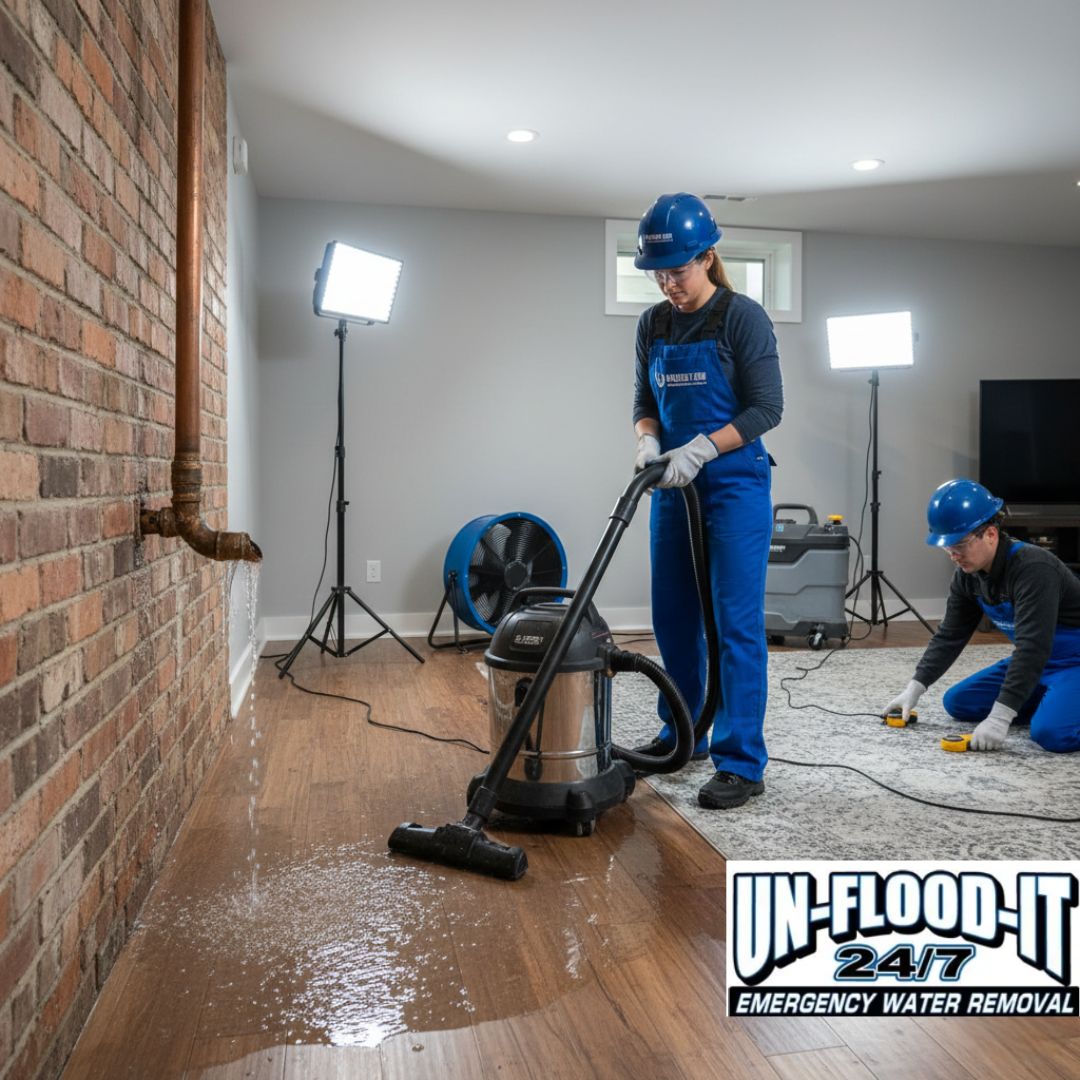
Emergency Response for Winter Pipe Ruptures
Emergency Response for Winter Pipe Ruptures
When temperatures plummet, the water inside your plumbing can turn to ice, expanding with enough force to crack copper, PVC, and even galvanized steel. The real disaster happens when that ice thaws, allowing high pressure water to flood your home through the newly formed gaps. Handling a frozen burst pipe cleanup requires immediate action to prevent long term structural issues. Your first priority must be turning off the main water supply to stop the flooding. Once the water is off, the focus shifts to professional extraction to ensure that moisture doesn't settle into your floorboards and drywall, which can lead to rapid mold growth and wood rot.
The Importance of Professional Water Extraction
Standard shop vacuums and household fans are rarely enough to handle the volume of water released by a burst pipe. Hidden moisture pockets behind baseboards and under cabinets can create a breeding ground for bacteria if not dried properly. Utilizing a specialized service like unfloodit.com/frozen-burst-pipe-cleanup ensures that industrial grade dehumidifiers and air movers are used to stabilize the environment. These professionals use moisture meters to verify that your home is truly dry, protecting your property value and your family's health from the secondary effects of water damage.
Long Term Prevention and Home Safety
After the initial cleanup is complete, it is essential to insulate any vulnerable plumbing to prevent a repeat occurrence. Focus on pipes located in unheated areas such as crawl spaces, attics, and garages. Simple fixes like foam pipe sleeves or heat tape can provide a necessary layer of protection. During extreme cold snaps, always keep your thermostat at a consistent temperature day and night, and allow faucets to drip slightly to relieve pressure. By combining these preventative habits with a quick professional response during an emergency, you can keep your home safe and dry throughout the winter season.
