Why Proper Moisture Control is the Secret to a Mold Free Home
The discovery of dark patches or a lingering damp scent in your basement is often the first sign of a much larger underlying issue. Mold is a persistent organism that requires very little to thrive, typically needing only a food source like drywall or wood and a consistent supply of moisture. Because these spores are microscopic, they can migrate through a building’s ventilation system long before they become visible to the naked eye. Relying on simple household cleaners to wipe away the surface growth is rarely a permanent solution, as the core of the colony remains embedded within the building materials.
Professional remediation focuses on a comprehensive strategy that prioritizes containment and source identification. By utilizing specialized technology like infrared cameras, experts can pinpoint exactly where water is entering the home, whether it is a pinhole leak in a pipe or seepage through the foundation. This level of precision is essential for ensuring that the cleanup is not just a temporary fix. Addressing the moisture at its source is the only way to guarantee that the remediation efforts will last and that your property remains structurally sound.
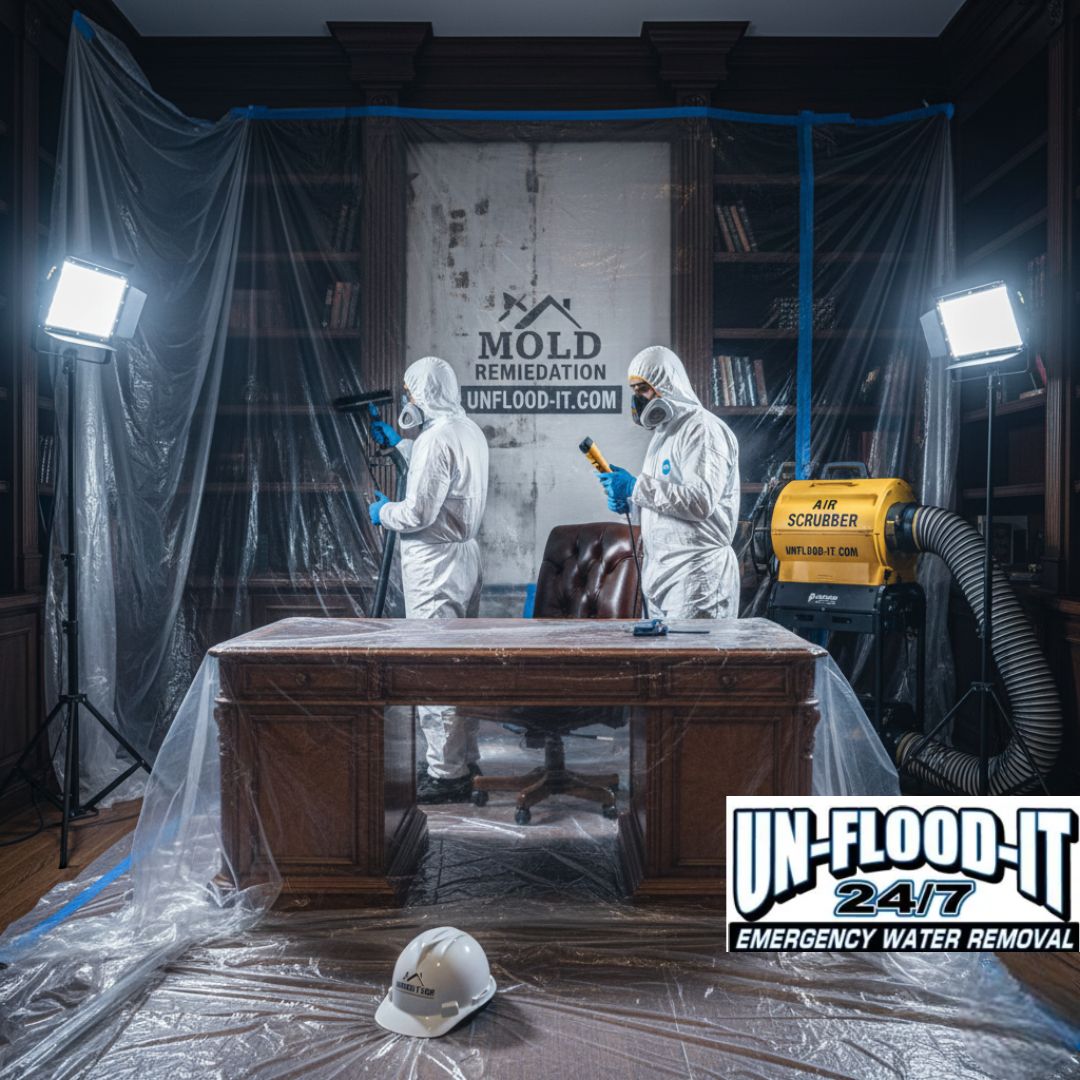
Beyond the physical damage to the home, the impact on indoor air quality is a major concern for many families. When mold is disturbed, it releases spores that can circulate throughout the living space, potentially leading to persistent respiratory discomfort and other sensitivities. High grade filtration systems and industrial dehumidifiers are used during the cleanup process to scrub the air and stabilize the environment. For homeowners facing these challenges after a leak or flood, visiting unfloodit.com provides access to the expertise needed to navigate the restoration process safely and efficiently.
Establishing a dry and well ventilated environment is the ultimate goal of any restoration project. This involves more than just the initial cleanup; it requires a commitment to maintaining low humidity levels and ensuring that air flows freely through crawlspaces and attics. Simple habits like using exhaust fans in the kitchen and bathroom can significantly reduce the risk of secondary growth. By taking a proactive approach to moisture management, you can protect your investment and ensure a healthy atmosphere for everyone under your roof.
